Weldon
Mariners' Museum, Uncurated Search Results
Type: Pungy
Year: 1870
Builder:
Location:
These records are found in the online catalog of The Mariners’ Museum and Park in Newport News, Virginia. Uncurated search results are presented to give researchers and interested readers an idea of whether the museum’s archives contain information about this vessel and whether it may be worthwhile to visit the museum’s catalog search page for further investigation. Uncurated results may be inaccurate or incomplete.
Search mode: Exact Name. Search phrase(s): "Weldon". Results returned: 19. Results displayed in this table: 19.
Use these buttons to send uncurated search results to your own app or text document for further research. First, check the box for any row, or click "Select All" then uncheck any rows. Then click "Show Selections". You can then copy your selections from the text box and past them into your app.
| Fetch? | Row ID | Media | Date | Vessel | Place | Related Places | Inscription/Marks | Subject | Notes | Archive Number |
|---|---|---|---|---|---|---|---|---|---|---|
| 1 | No image URL. | Written on verso: Weldon Labeman, son of Captain Labeman, Engineer room, St. John | Mr. Weldon Labeman standing on a pier holding a large fish | P0001.016/02-APP01#119 | ||||||
| 2 | 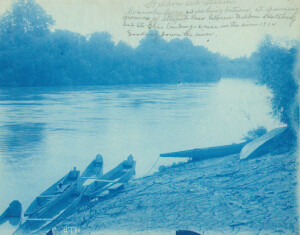 | USA; VIRGINIA | Written on verso: Roanoke River Batrau at Weldon NC substation spawning ground. Written on recto: Weldon substation, Roanoke river fishing bateau at spawning grounds of striped bass between Weldon and Steamer Ohio landing. A Rrise in the river in 1904. Looking down river. | Photo shows seven fishing bateaus tied at the shoreline or on shore on the Roanoke River. | P0001.009/01-#PI0370 | |||||
| 3 | 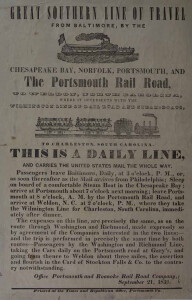 | GREAT SOUTHERN LINE OF TRAVEL FROM BALTIMORE | CL10356 | |||||||
| 4 | No image URL. | Chesapeake Bay (Md. and Va.) | Environmental protection–Research–Chesapeake Bay (Md. and Va.) | Cover title. Research summary editor: Mark Schaefer. Associate editor: Katherine Weldon. "May 1980." "EPA-600/8-80-019" | LB33634 | |||||
| 5 | No image URL. | World War, 1914-1918–Campaigns.; World War, 1914-1918–Naval operations. | "Hard lying" : __eastern Mediterranean, 1914-1919 | LB6510 | ||||||
| 6 | No image URL. | Pedro De Valdivia, Conquistador of Chile. | LB91844 | |||||||
| 7 | No image URL. | Confederate States of America. Navy–History. | Confederate States of America–History, Naval.; United States–History–Naval operations, Confederate. Civil War, 1861-1865 | Bulletin (Pee Dee Historical Association) ; 1910. | Narrative of the Confederate States navy __ __by W.F. Clayton. | LB10683 | ||||
| 8 | No image URL. | Mary Rose (Ship : 1511); Victory (Man-of-war : 1765); Batavia (Ship : 1628); Cutty Sark (Clipper ship : 1869); Preussen (Ship : 1902); Sobraon (Ship : 1866) | Sutton Hoo Ship Burial (England); Oseberg Ship Burial (Norway) | Sailing ships–History. | Includes index. | LB103622 | ||||
| 9 | No image URL. | 1/22/1862 | Minnesota (Frigate : 1857).; Roanoke (Screw frigate : 1857).; Pensacola (Screw steamer : 1861). | Norfolk (Va.)–History–Civil War, 1861-1865.; Fort Monroe (Va.)–History–Civil War, 1861-1865.; Fort Sumter (Charleston, S.C.).; Phoebus (Va.).; Craney Island (Norfolk, Va.). | Three-page letter addressed to his brother Joe in which he describes a rumor that General Ambrose Burnsides is planning to attack the Confederates in Norfolk. He mentions that the gunboats Minnesota, Roanoke, and Pensacola will attack Craney Island once the first gun is heard, and that other troops from Newport News and Camp Hamilton will march into Norfolk. In a postscript, Monegan describes another rumor that Fort Sumter and Moultrie were taken, and that the Burnsides expedition was going to attack Weldon, NC. | MS0014/-001.11#04 | ||||
| 10 | No image URL. | Princess Alice (Steamboat); Bywell Castle (Steamboat); Steamboat disasters–England–Thames River | "A complete narrative of the fearful disaster by which nearly 700 lives were sacrificed and a permanent record of the noble acts of heroism and devotion shewn in rescuing the survivors and recovering the dead together with a list of the names and addresses of the passengers lost" T.p. | LB3306 | ||||||
| 11 | No image URL. | International Military Education and Training Program (U.S.) | Naval education–United States.; Navies–Officers–Education–Naval art and science; Military assistance, American | "8423855" prelim. p. | LB32016 | |||||
| 12 | No image URL. | Merrimack (Frigate : 1856-1860).; Monitor (Ironclad : 1862).; Virginia (Ironclad : 1862). | United States–History–Naval operations. Civil War, 1861-1865 | Hampton Roads, Battle of, Va., 1862. | Includes index. | LB2528 | ||||
| 13 | 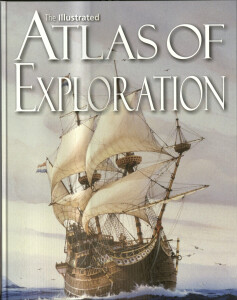 | Explorers–History.; Discoveries in geography–Maps.; Voyages and travels. | By arrangement with Weldon Owen Pty Ltd., Sydney, Australia. Includes index. | LB106718 | ||||||
| 14 | No image URL. | An authentic and impartial copy of the trial of Sir Hugh Palliser, Vice-admiral of theBlue : __held on board His Majesty's ship the Sandwich, in Portsmouth harbour on Monday, April 12,1779 : taken in shorthand by a Person who attended during the whole trial .. | LB32175 | |||||||
| 15 | 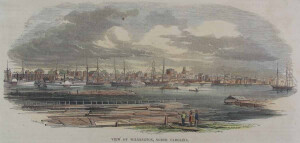 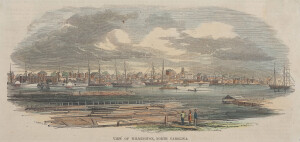 | NOTES: From: Gleason's Pictorial Drawing-Room Companion, July 2, 1853, Vol. 5, page 37. The text of the article that accompanies the image is as follows: Wilmington, North Carolina. Wilmington, the chief town of North Carolina, is situated at the confluence of the two principal branches of the Cape Fear River, 35 miles from the sea, 148 miles southeasterly from Raleigh, the capital of the State, and 865 miles from Washington. The first settlements on the Cape Fear River were at Fayetteville and Brunswick—the former, above, and the latter, some fifteen miles below Wilmington. Brunswick was the principal town and seaport of North Carolina, until the settlement of Wilmington, which first, from its superior location, became its rival, and then its gravedigger. Nothing now remains of the once proud seaport of the State, but the verdure-covered ruins of the old church, and the foundation of the palace erected and occupied by Tryon, while colonial governor. There is nothing attractive to the tourist in travelling through the State of North Carolina; its sandy soil and monotonous scenery affording but a tiresome prospect, and any change being welcome which relieves the interminable pine forests. Of the western section we cannot speak with so much accuracy; but on a recent trip from Weldon, on the northern boundary of the State, to Wilmington, a distance of one hundred and sixty-two miles, we were struck with the unchangeableness of the scene. There was little to relieve the monotony of the interminable pine forests and cypress swamps, except an occasional log cabin, with its rude inmates, or an occasional collection of huts with a water tank, collectively dignified with the high-sounding name of Washington, Warsaw, or some other euphonious title. This immense tract, however, furnishes the staple commodities of the State, viz., tar, pitch, turpentine and lumber. Wilmington, although it presents nothing to attract the attention of the visitor, is a rapidly growing and healthy place. Its numerous turpentine distilleries have served to keep off the epidemics which might otherwise have been looked for from its near location to swampy lands, and for consumptives no atmosphere could be more beneficial. The accompanying view is taken from Point Peter, opposite to the town. In the foreground is seen the timber-pew of the Point Peter sawmills, while in the stream are seen a timber-raft, a fiat-boat, with bales of rice straw, a dug-out, or canoe dug out of a solid log, and other characteristics. The harbor of Wilmington has a dangerous shoal at its entrance, but will admit vessels of two hundred tons. There are two islands, enclosed by different channels of the river, opposite the town, on which are some of the finest rice fields of the south. Wilmington is at the terminus of the great series of southern railroads extending from New York, and, branching in various directions from the main route. | CL16045 | |||||||
| 16 | No image URL. | Congress (Frigate : 1842).; Cumberland (Sloop-of-war : 1857).; Connecticut (Side wheel steamer : 1848).; United States. Army. New York Infantry Regiment, 170th (1862-1865). | United States–History–Civil War, 1861-1865–Personal narratives. | Hampton Roads, Battle of, Va., 1862.; Shipwrecks–Virginia–Hampton Roads (Harbor).; Temperance. | This collection consists of an eight-page letter from Augustus B. Sage, a captain in the New York 170th Infantry Regiment, to his sister G.B. Sage. Sage writes about his travels from the Washington Navy yard to the Regiment's encampment near Newport News on the steamer Connecticut. He describes a fight between several officers of the regiment and the captain of the Connecticut and recounts his actions in the event. He states that some of the officers were drunk on board the ship. The Connecticut arrived the next morning in Hampton Roads, and Sage lists many of the ships he sees. Sage recounts that he has seen the charred remains of the USS Congress and USS Cumberland. | MS0332 | ||||
| 17 | No image URL. | Imogene (Side wheel steamer : 1865). | United States–History–Blockades. Civil War, 1861-1865; United States–History–Naval operations, Confederate. Civil War, 1861-1865; United States–History–Civil War, 1861-1865–Personal narratives. | This small collection focuses on the Civil War service of Andrew Jackson Forrest, primarily aboard the Confederate blockade runner Imogene. His certificate of discharge from the Imogene in Liverpool in 1865 is of particular interest. In 1912, Forrest traveled to Wilmington, North Carolina with his wife to visit with some old shipmates from his blockade running days. This visit occasioned two letters in the collection that he wrote to his son, William, in which he discusses his Civil War service and the reunions with old shipmates. A third, undated, letter from his brother-in-law, William B. Needham, to William Forrest includes a newspaper clipping from the Wilmington Star that describes Andrew Forrest's 1912 visit to the area. Also present in the collection is a copy print of an original work of art that purports to show the Imogene. | MS0574 | |||||
| 18 | 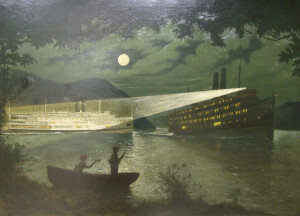   | SHORT DESCRIPTION: Oil painting by Samuel Ward Stanton showing the Citizens Line steamboats Rensselaer and Trojan of the Hudson Navigation Company. The image shows the two vessels at night with the Trojan at the right illuminating the Rensselaer at the right with its searchlight. The vessels are viewed from the forested shoreline. A canopy of leaves crosses the top of the canvas. In the foreground at the bottom is a grassy shoreline dotted with periodic bushes, mostly at the left side. A small rowboat is in the water near the shoreline carrying a man and a woman. The man is standing and appears to be holding an oar or pole. The woman is sitting and appears to be waving a handkerchief at the passing steamboats. A full moon sits in a partly cloudy sky at the top center left. Behind the boats are the steep headlands that line the Hudson River. The aspect of the scene appears to have been taken from Little Stony Point looking towards Storm King. This area is frequently referred to as the "Southern Gate of the Hudson Highlands." The painting was probably created in 1909 when the two new steamboats were first placed on the New York to Troy route. NOTES: Notes from “The Beautiful Hudson by Searchlight” issued by The People’s Evening Line Steamers of New York in 1905, discussing the use of searchlights by the Hudson Navigation Company steamboats. Reviewing the book it’s obvious the searchlight theme was part of the company’s marketing strategy before Rensselaer and Trojan were launched. All the steamboats of the line were fitted with 36-inch battleship searchlights (the largest made) on their bows so that “when darkness comes on….the great searchlight forward picks out the beautiful spots on shore or mountain and illuminates them with almost startling weirdness and brilliancy.” The text indicates the searchlights were operated continuously after dark to highlight villages, the homes of prominent officials and businessmen, famous public buildings (like Sing Sing prison and West Point Military Academy), terrestrial landmarks (like hills, mountains and waterfalls), bridges and historic sites along the route. The use of the searchlight was considered to be a highlight of night time travel on the Hudson. The brochure remarks “standing on the deck of the steamer one is constantly surprised by glimpses given by the searchlight through the trees and foliage, of bits of scenery which are picturesque in the truest sense of the word.” As vessels traveling the route met they would use their searchlights to attract the other’s attention and the boats would exchange “good-nights” as they passed. NOTES: Excerpt from “Up the Hudson and Beyond,” providing a thorough description of the steamboats Rensselaer and Trojan. The Hudson Navigation Company operated two lines, The People’s Line, operating a night time steamer service between New York and Albany (Adirondack (1896) and C. W. Morse (1904)), and the Citizen’s Line, operating a night time steamer service between New York and Troy (Trojan (1908) and Rensselaer (1909)). Hudson Navigation Company added Trojan and Rensselaer to the Citizens Line in the spring/summer of 1909. “Each boat is a steel-hulled side-wheel steamboat, having a length of 330 feet. The breadth of the hull at the main deck is 42 feet, and over the guards at 76 feet, and the boat has a mean draft of 9.25 feet. The engine is of the surface-condensing type of 2,800 horsepower. The paddle wheels are of the feathering type. The vessel is magnificently furnished, the interior being steam-heated throughout and equipped with about 1,200 electric lights. The general color scheme of the decoration is white with gold trimming, with furniture and upholstering of contrasting colors. African mahogany is used throughout for the woodwork of the main deck, chairs on this deck, dining room chairs, and for balustrades and columns of the grand stairway. The metal work is polished brass in very antique setting. There is a parquette flooring in the dining room, with interlocked rubber tiling of green and white on the quarter deck and stair treads. Wilton carpet runners and window curtains and shades of green are used in the dining room, while red predominates in the central saloon and gallery corridors. Each boat is licensed to carry 1,200 passengers, and has a freight capacity of 400 tons. There are 240 staterooms, carried in three tiers or galleries above the main deck, and communicating with it and the main saloon by means of ample and ornamental staircases. The upper gallery is furnished throughout with brass beds 44 inches wide, and with the usual toilet conveniences of exceptionally convenient pattern. On the gallery deck the rooms are furnished with white enameled iron beds, while the saloon deck rooms are furnished with 54 inch double brass bedsteads and all rooms are furnished with mahogany furniture. Several of the rooms have private bath attached, these bathrooms being tiled in white enamel, with white enameled tubs and other appliances. All the suites are finished in Louis XVI style, with furniture to match. On the main deck are the dining room, quarter deck, frame deck, purser’s office, baggage room, parcel room, cafe, and barber shop. The dining room is lighted by 120 frosted electric bulbs in very antique holders, and has a seating capacity of 190. Each of the side tables carries an ornamental bronze standard with cathedral glass shade, containing an electric bulb. In the center of the room are two remarkably fine buffets in mahogany and plate glass. The chief and practically the only, difference between the Trojan and the Rensselaer is that the latter has some of the after staterooms on the upper decks made larger and the deck house is therefore somewhat longer. In all other respects the two steamers are identical.” NOTES: Samuel Ward Stanton was born on January 8, 1870, probably in Newburgh, New York. Stanton was an artist, was considered an authority on steam shipping and authored numerous articles and books. He served as the editor of the journal The Nautical Gazette between February 11, 1904 and May 19, 1910. His best known work, American Steam Vessels, was published in 1895. Stanton lived at 506 West 172d Street, New York and his studio was located at The Alpine, 33rd Street and Broadway, New York. Stanton was a prolific artist producing pen/ink and pencil drawings of steamboats and designing murals and other decorative features for many Hudson River steamboats including steamers Hendrick Hudson, Robert Fulton and Clermont. Stanton had completed nine mural paintings for the new steamboat Rose Standish shortly before his death in the sinking of the RMS Titanic on April 15, 1912. Stanton had spent several months in Europe, especially Alhambra, Spain, where he was studying and creating sketches in preparation for the creation of murals illustrating the tales of Washington Irving that would be used to decorate the interior of the new Hudson River steamboat Washington Irving (Hudson River Day Line). He had also studied in Paris. Although he died before the murals could be created, his sketches were used to create the final illustrations. The Bridgeport Times and Evening Farmer, June 4, 1909 states this about Stanton and his artwork: “The mural decorations on this boat [Robert Fulton] surpass anything of the kind ever seen before. They were executed by Samuel Ward Stanton, an artist almost unknown to fame, but a gentleman who has been quietly and persistently working at his profession for 30 years. When he sent his designs for competition they were at once accepted. He represents nearly the whole history of water navigation from the time of Hendrick Hudson, to the present day, in connection with Hudson River scenery, including Anthony’s Nose, Newberg and West Point. When passengers first see these striking and beautiful paintings, they stand amazed at the conceptions of the artist.” The scenery of a painting by Stanton titled “The Southern Gate of the Hudson Highlands” published in the June 17, 1909 Nautical Gazette is strikingly similar to the background in this painting. VESSEL HISTORY: In 1909 the Hudson Navigation company replaced the Saratoga and City of Troy with the new steamers Rensselaer and Trojan. The North Adams Transcript of March 24, 1909 (page 2) states the new steamers will be commissioned later in the season. •Launch of the Trojan reported in The Nautical Gazette, October 29, 1908. •Launch of the Rensselaer is reported in The Nautical Gazette, April 1, 1909. •The Yonkers Herald of March 25, 1909, page 6, writes that the steel-hulled Rensselaer was launched from the Thomas S. Marvel Shipbuilding Company at Newburgh, New York, and then commissioned on March 24, 1909. The article mentions the boat was the companion to Trojan, which was launched from the same shipyard on October 26, 1908 (NYT says 28th) and is now nearly ready to go into commission between Troy and New York. •Both boats were the property of the Hudson Navigation Company, owners of the People’s Line (the New York Times said the boat was the new steamer of the Citizen’s Line), all of who’s boats travel on the Hudson River. •Rensselaer was commissioned by an 8-year-old girl named Kathryn Parker Culver (the Yonkers Herald of August 16, 1909 says 18 years old), daughter of the president of the Hudson Navigation Company (A.I. Culver). •Trojan had been commissioned by Mary K. Murray. •Rensselaer’s machinery will be installed by the Fletcher Co. of Hoboken and the joiner work will be put in by John Englis (similar work was done on Trojan by the same men). •Rensselaer is 330 feet overall, 76 feet beam and 9 feet draft. She will have a main saloon, a gallery and an upper gallery above the quarter deck. In these three tiers there will be 230 staterooms (NYT says 250). The dining room capacity is to be about 200 at one sitting. There will be freight accommodations for approximately 400 tons. The speed of the new craft will be 18 miles an hour. •The New York Times, March 25, 1909, Page 6, states the boat will be finished at “Fletcher’s yard, Hoboken,” and will go into commission July 1, 1909. At the time of the article Trojan was nearing completion and would soon be undergoing dock trials of her engines in Hoboken. The article also reports, “the boat will be equipped with a powerful searchlight, of battleship size, and will have a wireless telegraph outfit.” The article also states that a number of staterooms will have private baths. •Trojan arrived in Troy on April 20, 1909. The Brooklyn Daily Eagle, May 16, 1909, page 54, notes the ship is similar in construction to Rensselaer, has 240 staterooms, 330 feet long, 90 feet wide and will be in commission about June 15. •An advertisement in the New York Tribune, May 16, 1909 shows the two boats will be operating under the Citizens Line. The Trojan leaves on Mondays, Wednesdays and Fridays from Pier 46, North River, foot of West 10th Street, New York. Citizens Line connects at Troy for same points, Williamstown, North Adams, Manchester, Bennington, Burlington, and all points north and east. The ad features the tag line “The Beautiful Hudson by Searchlight.” •The Philadelphia Inquirer, June 13, 1909, page 3, says the new Citizens Line steamers, Trojan and Rensselaer, will leave New York in the evening and reach their destination the following morning. •The New York Tribune, July 2, 1909, page 14, notes the Rensselaer will make her first regular trip from New York to Troy (today). Rensselaer is licensed to carry 1200 passengers. •The Brooklyn Daily Eagle, July 4, 1909, page 6, describes Rensselaer as a steel hulled sidewheel steamboat. •The Yonkers Herald, July 12, 1909, page 2 calls the Citizen’s Line “the popular searchlight route.” •According to The Yonkers Herald, September 29, 1909, page 3, Trojan participated in the Hudson-Fulton naval parade from New York to Newburgh next Friday (October 1?). The Trojan will carry New York States officials. •The New York Times, May 26, 1912, page 95, advertisement for the People’s Line/Citizen’s Line carries the text: Enjoy your travel as well as the resorts you travel to. Take the All Sail No Rail route up the famous Hudson to Albany and Troy…See the marvelous panorama of the most beautiful river in America unrolled by searchlight. •Starting in 1916 the Hudson Navigation Company published the “Searchlight Magazine” monthly during its travel season and given to customers and potential for free (First advertisement appears in Weldon Record, March 31, 1916, page 5). •In 1925 Trojan was regarded as the fastest boat of the night line fleet. In the fall of 1920 it was recorded that Trojan beat the previous record of the Adirondack between Albany and New York by 18 minutes. •On November 23, 1926 at 11PM Trojan was rammed by the freight boat Cedarhurst near Stony Point. The accident ripped a gash 125-feet long above the waterline on the portside of Trojan. •Rensselaer was rammed by the Swedish freighter Roxena near Poughkeepsie on the night of September 27, 1933. A large hole was torn in Rensselaer below the waterline but the vessel was able to warp up to a stone barge and shift the freight to raise the damaged section of the hull above the waterline. The passengers were offloaded and taken to New York by train. •The financial affairs of the Hudson Navigation Company became difficult in the 1930s when passenger and freight travel decreased to such an extent that the boats could not cover their expenses. The company was taken over by a New York bank in 1932 and then was sold at a bankruptcy sale on March 28, 1935 to New York subway builder named Samuel Rosoff and his associates. •During the World’s Fair at New York Trojan was renamed New Yorker. It operated between the Battery in New York and the site of the fair. On the night of March 1, 1940 while the Rensselaer and Trojan were moored end to end in winter quarters at Marlboro the Trojan caught fire and was completely burned. Rensselaer was blistered by the heat but survived the incident. •Later the Rensselaer was sold to a Fall River, Massachusetts company and her super structure was demolished and the hull sold for a freight barge. VESSEL INFORMATION-- VESSEL NAME: Rensselaer VESSEL TYPE: Steel Side Wheel Steamboat SERVICE DATES: 1909-1943 SHIP LINE: Hudson River Night Line SHIP BUILDER: Marvel Shipbuilding Company BUILDER LOCATION: New York, Newburgh VESSEL HISTORY: Hull converted to barge and renamed James River. VESSEL DIMENSIONS: 2,690 gross tons, 1796 net tons; 317.3 x 42.5 x 12.5 RELATED VESSELS: Trojan (sister ship) PLACE OF DISPOSAL: Rhode Island, Providence DATE OF DISPOSAL: 1943 VESSEL HISTORY: Dismantled in August, 1943 at Providence, Rhode Island and hull converted into a barge named the JAMES RIVER. Scrapped in 1962. VESSEL INFORMATION-- VESSEL NAME: Trojan VESSEL TYPE: American Steel Hull Side-wheel steamboat SERVICE DATES: 1909 SHIP BUILDER: T.S. Marvel Company BUILDER LOCATION: New York, Newburgh ASSOCIATED PLACE: New York, Hudson River VESSEL HISTORY: Built 1908, place in commission April 17, 1909. Night boat on Hudson River SHIP OWNERS: Hudson River Navigation Company VESSEL DIMENSIONS: 330' x 42' (76 feet over guards) x 13'6" RELATED VESSELS: Berkshire VESSEL HISTORY: (1) TROJAN (1909-1939); (2) New Yorker (1939-1940). FATE: Burned on March 1, 1940. | CL12702 | |||||||
| 19 | No image URL. | Illinois Central Railroad Company.; Hanford Engineer Works.; Royal Philharmonic Orchestra.; Schloss Neuschwanstein (Germany).; Hollywood Bowl (Los Angeles, Calif.).; Baltimore and Ohio Railroad Company.; United Nations Headquarters Commission.; Museum of Science and Industry (Chicago, Ill.); Art Institute of Chicago.; Frank Buck Zoo (Gainesville, Tex.).; Field Museum of Natural History.; Edgewater Beach Hotel (Chicago, Ill.).; Columbus (Screw schooner : 1903).; Winchester Mystery House (San Jose, Calif.).; Grand Central Terminal (New York, N.Y.).; Hamburg-American Line.; Resolute (Turbo Steamship : 1920)–Photographs.; NewYork-Presbyterian Hospital.; Franconia (Turbo steamship : 1923).; Madison Square Garden (New York, N.Y.).; Long Island Rail Rroad.; New York Yacht Club. | New York (N.Y.)–Photographs.; Philadelphia (Pa.)–Photographs.; Chicago (Ill.)–Photographs.; Pennsylvania Turnpike (Pa.)–Photographs.; Hanford (Wash.)–Photographs.; America, Gulf of–Photographs.; Houston (Tex.)–Photographs.; Erie Canal (N.Y.). Photographs.; British Columbia–Photographs.; South Island (N.Z.)–Photographs.; Pensacola (Fla.)–Photographs.; Boston (Mass.)–Photographs.; Hollywood (Los Angeles, Calif.)–Photographs.; Saint Petersburg (Fla.)–Photographs.; Salzburg (Austria)–Photographs.; Bavaria (Germany)–Photographs.; Sarasota (Fla.)–Photographs.; Geneva (N.Y.)–Photographs.; Grand Canyon (Ariz.)–Photographs.; Wyoming–Photographs.; Volcano (Calif.)–Photographs.; Yakima (Wash.)–Photographs.; Woodstock (Vt.)–Photographs.; Cheddar (England)–Photographs.; Shaftesbury (England)–Photographs.; Somerset (England)–Photographs.; Fernhurst (England)–Photographs.; Derbyshire (England)–Photographs.; Stonehaven (Scotland)–Photographs.; Skye, Island of (Scotland)–Photographs.; Arisaig (Scotland)–Photographs.; Charlottetown (P.E.I.)–Photographs.; San Juan (P.R.)–Photographs.; Holland (Netherlands : Province)–Photographs.; Long Island (N.Y.)–Photographs.; Farmingdale (N.Y.)–Photographs.; Canton (Ohio)–Photographs.; Mount Jewett (Pa.)–Photographs.; Cleveland (Ohio)–Photographs.; Erie, Lake–Photographs.; Port Clinton (Ohio)–Photographs.; Mansfield (Ohio)–Photographs.; Massillon (Ohio)–Photographs.; Suwanee River (Ga. and Fla.)–Photographs.; Welland Canal (Ont.)–Photographs.; Santa Cruz (Calif.)–Photographs.; Tangier (Morocco)–Photographs.; Miami (Fla.)–Photographs.; Cape Cod Canal (Mass.)–Photographs.; Cape Cod (Mass.)–Photographs.; North Conway (N.H.)–Photographs.; Barcelona (Spain)–Photographs.; Florence (Italy)–Photographs.; Thames River (England)–Photographs.; Greenwich (London, England)–Photographs.; Copenhagen (Denmark)–Photographs.; Albany (Ga.)–Photographs.; Montauk Point State Park (N.Y.)–Photographs.; San Francisco (Calif.)–Photographs.; Guangzhou (China)–Photographs.; Fort Knox (Ky.)–Photographs.; Sri Lanka–Photographs.; Candlewood Lake (Conn.)–Photographs.; Andover (Mass.)–Photographs.; Lake Success (N.Y.)–Photographs. | Tunnels–Pennsylvania–Breezewood–Photographs.; Football–Photographs.; Railroads–Illinois–Photographs.; Nuclear industry–Washington–Hanford–Photographs.; Greyhound buses–Photographs.; Mountains–New Zealand–Photographs.; Glaciers–New Zealand–Photographs.; Bathing beaches–Florida–Pensacola–Photographs.; Horse racing–Florida–Miami–Photographs.; Woolen goods industry–New Zealand–Photographs.; Castles–Bavaria–Photographs; Hotels–Austria–Photographs.; Parks–New York (State)–New York–Photographs.; Engraving–Photographs.; Canoes and canoeing–Photographs.; Indigenous peoples–Wyoming–Photographs.; Rodeos–Wyoming–Photographs.; Female nude in art–Photographs.; Railroads–Québec–Montréal–Photographs.; Police stations–New York (State)–New York–Photographs.; Agriculture–Photographs.; Goatherds–Texas–Photographs.; Cattle–Photographs.; Biplanes–Photographs.; Gorges–England–Cheddar–Photographs.; Ballet dancers–Photographs.; Airplanes, Military–Photographs.; Cargo ships–Photographs.; Ocean liners–Photographs.; Bridges–Massachusetts–Cape Cod–Photographs.; Museums–New York (State)–New York–Photographs.; Motorboats–Photographs.; Sailboats–Photographs.; Yachts–Photographs.; Yachting–Photographs.; Schooners–Photographs.; Harbors–Germany–Photographs.; Merchant ships–Photographs.; Horse shows–New York (State)–New York–Photographs.; Fishing–New York (State)–New York–Photographs.; Fishers–New York (State)–New York–Photographs.; Buddhist priests–China–Photographs.; Yacht clubs–New York (State)–New York–Photographs. | Contains photographic negatives of downtown Philadelphia, Pennsylvania, Rays Hill Tunnel on the Pennsylvania Turnpike, air views of Houston Texas, football players, Illinois Central Railroad Station and Weldon Yards in Chicago, Illinois, the Chicago skyline, Hanford Works, the Royal Philharmonic Orchestra, the British Columbia Trust Bureau, views of Donegal, Pennsylvania, views of the Tasman Mountains and Fox Glacier in South Island, New Zealand, views of Pensacola and Pensacola Beach, Florida, horses and horse racing, views of Boston Massachusetts, knitwear factories in New Zealand, the Hollywood Bowl in Hollywood, California, portraits of people, doctors at work, views of St. Petersburg, Florida, views of Salzburg, Austria, Neuschwanstein Castle in Bavaria, the White Horse Inn in St. Wolfgang, Austria, views of Sarasota, Florida, views of Highbridge, New York, views of New York City, New York, a copy of an engraving of Edward Burgess, views of Geneva, New York, the Baltimore and Ohio Railroad locomotive President Washington, views of Chicago, Illinois, the Grand Canyon in Arizona, rodeos in Wyoming, the Sawdust Inn in Volcano, California, nude portraits of women, the Montreal Railroad Station, the Bowery neighborhood in New York City, the Police Headquarters building in New York City, indigenous goatherds in Texas, various zoo animals, the United Nations Headquarters on Lake Success, views of Woodstock, Vermont, Aberglaslyn Pass in North Wales, Shaftesbury in Dorset, England, Minehead in Somerset, England, views of Sussex, England, the harbor at Stonehaven in Kincardineshire, Scotland, views of Isle of Skye, Scotland, views of Arisaig, Scotland, the Amarya River, views of Charlottetown in Prince Edward Island, Canada, views of San Juan, Puerto Rico, aerial views of the Hague in Holland, ballerinas of the Fokine Ballet, Bostwick Field in Long Island, New York, Navy helicopters, City of Glass in Farmingdale, New York, the Museum of Science and Industry in Chicago, the Christian Science Church in Chicago, views of Ohio, the March Foundation School in Ohio, the Oakes Hotel in Canton, Ohio, the Mount Jewett Tannery in Pennsylvania, Terminal Tower in Cleveland, Ohio, Buckingham Fountain in Chicago, views of Port Clinton, Ohio, fish companies, views of Lake Michigan, the Shedd Aquarium, the Field Museum of Natural History, the Admiral apartment hotel, the Wrigley building group in Chicago, the Edgewater Beach Hotel, lumbermen at work, canoes, views of Ashland, New York, the vessel SS Columbus, the Cloisters museum in New York City, the Suwanee River in Florida, animals of the Frank Buck Zoo, the Welland Canal in Ontario, Canada, railroads and railroad workers, the Winchster Mystery House, people of Madeira, Portugal, people of Tangiers, Morocco, views of Miami, Florida, Grand Central Station in New York City, the Sagamore Bridge over the Cape Cod Canal in Massachusetts, views of North Conway, New Hampshire, the vessel Mar-Negro, the Hamburg American ocean liner Resolute, views of a kasbah market street, unidentified cathedrals in Barcelona, Cornell Medical Center in New York City, the statue of Perseus with Medusa's Head in Florence, Italy, views of Florence, Italy, the vessel SS Franconia, the lumber industry and turpentining pine trees, unidentified schooners, the Thames River, views of Copenhagen, Denmark, harbors in Germany, unidentified sailing ships, views of Albany, Georgia, views of the lighthouse at Montauk Point, the Montauk Manor Hotel, city hall in San Fransisco, California, North American F-86 jet planes, an old engraving of the Boston Tea Party, views of Mount Aetna, Temple Emanuel in New York City, the Madison Square Garden Horse Show of 1933, views of the Long Island Railroad, the Dorothy Walton House Museum in Pensacola, Florida, various views and people of China, the United States Gold Depository at Fort Knox, Kentucky, views of Candlewood Lake, views of Venice, Italy, the Addison Andover Art Gallery in Massachusetts, and fishermen at work. | P0002.001/50-156 |
Created 2026 by Don Barker, CBMM volunteer, for the Chesapeake Shipbuilding Project. shipbuilding@sailingworkboats.es